Sergii Danyliuk

Platform Engineer — Miami, FL

I run Kubernetes platforms that stay up — and pay for themselves.

Currently at Chewy, where a six-person platform team runs 40+ applications across 7 EKS clusters. I work AI-first with the guardrails to do it safely: agent skills review our Terraform and Kubernetes changes before they merge.

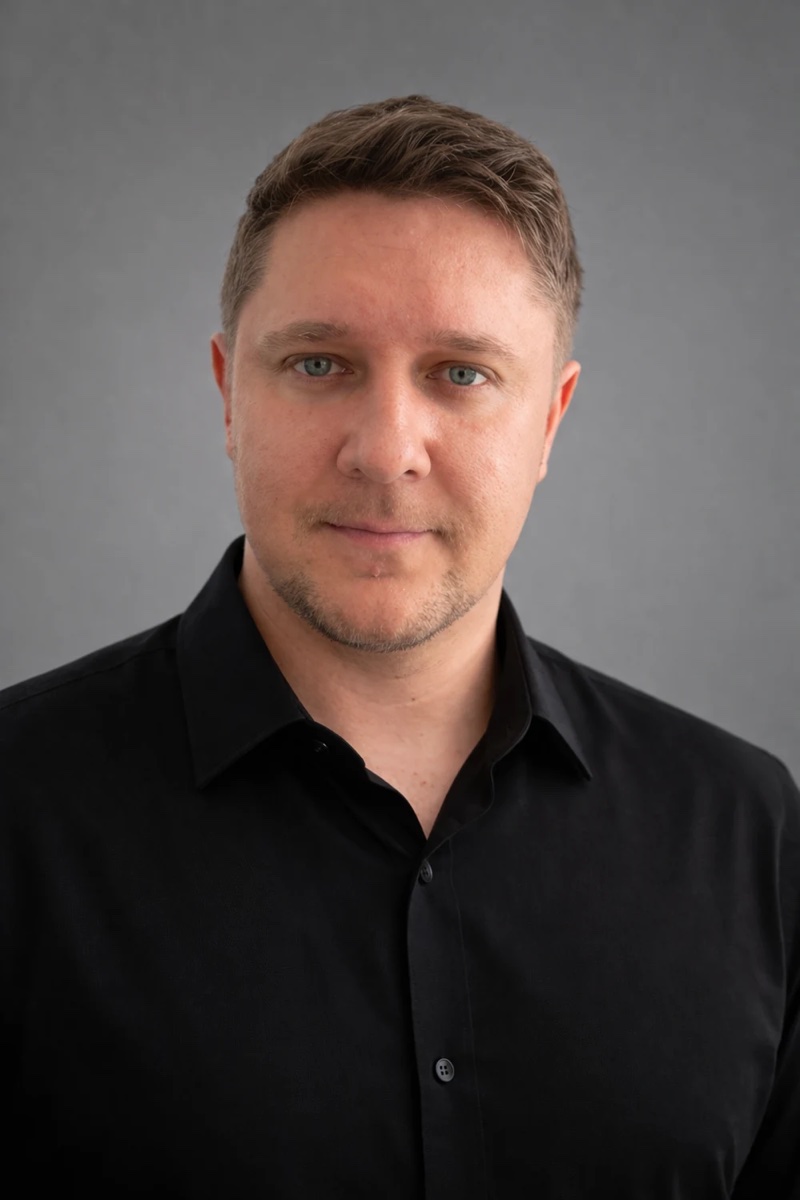
Portrait of Sergii Danyliuk
40+apps · 7 EKS clusters
99.5%availability SLO
~30%compute cost cut
5 min → 45 snode scale-up

Selected work

Four from the platform team at Chewy, one from my Samsara years.

01

Karpenter: a third off the compute bill

Chewy · fleet ~200 → ~140 nodes · scale-up ~5 min → ~45 sec

Node provisioning ran on Cluster Autoscaler: slow to react — around five minutes for capacity to arrive — and chronically over-provisioned, because node groups can't right-size to what pods actually request.

I migrated provisioning to Karpenter: just-in-time nodes sized to the pending pods, with workload consolidation packing the fleet tighter as demand moves. Workloads are split across NodePools — spot instances for general workloads, on-demand for critical cluster operations — enforced with taints and tolerations so nothing critical lands on capacity that can disappear.

The fleet went from roughly 200 nodes to 140 — about 30% off compute spend — and node scale-up dropped from ~5 minutes to ~45 seconds, which is the difference developers actually feel.

  • Karpenter
  • EKS
  • Terraform
  • EC2 Spot
02

Agent skills that gate infrastructure changes

Chewy · 15+ Claude Code skills · CI review gates at PR time

Review is where expensive mistakes get caught, and it's inconsistent — a careful reviewer catches a destructive Terraform change at 9am and misses it at 6pm. I built 15+ Claude Code agent skills for our infra and deployment work so the thorough version is the default. The three I go deepest on: a Terraform plan reviewer that risk-tiers every change and leads with an apply/don't-apply verdict, a Kubernetes manifest reviewer that checks limits, probes, image pinning and RBAC, and an incident-triage assistant that walks a firing alert change-first.

Each skill pairs the model's judgment with a deterministic Python script: the script parses the actual plan JSON or YAML and reports exactly what's there — every destroy, every IAM widening, every missing limit — and exits non-zero on critical findings so CI can block a bad apply. The model explains and prioritizes; it doesn't invent findings.

I validated them with an eval loop — every test case run with and without the skill, graded against fixed checks. The honest result: the base model is already strong, and the repeatable win is determinism plus safety discipline. The skills recommend rollbacks; they never run them.

  • Claude Code
  • Python
  • GitHub Actions
  • Terraform
  • Kubernetes
03

GitOps with nothing hand-deployed

Chewy · 40+ apps · 7 EKS clusters

App delivery is declarative, pull-based GitOps with ArgoCD: Git is the source of truth, GitHub Actions runs the promotion pipeline that updates it, and ArgoCD reconciles the clusters to match — with automated drift detection and rollbacks that are just a revert.

The platform plumbing is automated to the same standard: cert-manager syncs TLS certificates with ACM, external-dns manages Route53 records, and secrets reach pods through the AWS Secrets Manager CSI driver over IRSA. No manual steps between a merged PR and a running, certificated, DNS-addressable service.

  • ArgoCD
  • Helm
  • GitHub Actions
  • cert-manager
  • external-dns
  • IRSA
04

A data layer with zero standing credentials

Chewy · Multi-AZ PostgreSQL on RDS · recovery drilled, not assumed

The databases run Multi-AZ PostgreSQL on RDS with no static credentials anywhere: pods mint short-lived tokens through IAM database authentication over IRSA, so there is nothing to rotate and nothing to leak.

Recovery is proved, not assumed — EventBridge-driven snapshot lifecycle, and point-in-time-recovery restore drills that actually run, because a backup you've never restored is a hope, not a plan.

  • RDS
  • IAM · IRSA
  • EventBridge
  • Lambda
05

Moving live infrastructure without downtime

Samsara · 150+ resources · 5 AWS accounts

I migrated live infrastructure from CloudFormation to Terraform — 150+ resources across 5 AWS accounts — with zero downtime, behind a documented runbook and rollback plan for every stage.

The same modernization took IAM with it: long-lived users and static access keys replaced with role-based access — 50+ roles scoped with permission boundaries, cross-account access via STS assume-role — and zero standing access keys in CI once the pipelines moved to GitHub Actions OIDC federation.

  • Terraform
  • CloudFormation
  • IAM · STS
  • GitHub Actions OIDC

About

Miami, FL

I'm a Platform Engineer with six years in — the last three at Chewy, where a six-person platform team (four engineers, two principals) runs the EKS platform behind 40+ applications across 7 clusters: three app environments and four platform clusters, all Terraform-managed, all delivered from Git with ArgoCD, held to a 99.5% availability SLO with error-budget and burn-rate alerting.

Before that I spent three years at Samsara as a DevOps engineer. That's where I learned to change infrastructure that's already carrying traffic: migrating live stacks from CloudFormation to Terraform without downtime, modernizing IAM across five accounts, and wiring the CI/CD that made both repeatable.

The last stretch has changed how I work. I run Claude Code daily — plans with checkpoints, conventions committed as context, every change through a PR I review. I built our agent skills that review Terraform plans and Kubernetes manifests at PR time, with deterministic scripts doing the mechanical checks and hard lines the agent doesn't cross: it recommends, it never applies. The interesting problem in 2026 isn't whether AI can do infrastructure work — it's building the guardrails so it does it safely. That's a platform problem, and platform problems are what I like.

Experience

Chewy

Plantation, FL

Platform Engineer Sep 2023 – Present

  • Cut EKS compute cost ~30% (fleet from ~200 to ~140 nodes) and node scale-up time from ~5 min to ~45 sec by migrating provisioning from Cluster Autoscaler to Karpenter — just-in-time, right-sized nodes with workload consolidation, split across NodePools (spot for general workloads, on-demand for critical cluster ops).
  • Moved app delivery to declarative, pull-based GitOps with ArgoCD — Git as the source of truth, automated drift detection, and fast rollbacks across 40+ apps and 7 EKS clusters.
  • Automated TLS, DNS, and secrets with cert-manager, external-dns, and the AWS Secrets Manager CSI driver over IRSA — ACM-synced certs, Route53 records, and pod secret injection with no manual steps.
  • Ran Multi-AZ PostgreSQL on RDS with zero static database credentials — pods mint short-lived tokens via IAM auth over IRSA — and proved recovery with EventBridge-driven snapshot lifecycle and PITR restore drills.
  • Anchored the platform to a 99.5% availability SLO — error-budget and burn-rate alerting via Prometheus/Grafana/Alertmanager, logs dual-shipped through EFK to S3, and EKS control-plane audit logs in CloudWatch.
  • Built 15+ Claude Code agent skills for the platform's infra and deployment work — CI review gates that block unsafe Terraform and Kubernetes changes at PR time instead of in production.

Samsara

San Francisco, CA

DevOps Engineer Oct 2020 – Aug 2023

  • Migrated live infrastructure from CloudFormation to Terraform — 150+ resources across 5 AWS accounts — with zero downtime via a documented runbook and rollback plan.
  • Wired GitHub Actions CI/CD across infra and apps with OIDC federation — plan-on-PR / apply-on-merge for Terraform, image build → ECR → Helm deploy for services.
  • Replaced long-lived IAM users and static access keys with role-based access across 5 AWS accounts — 50+ roles scoped with permission boundaries, cross-account access via STS assume-role, and zero standing access keys in CI after moving pipelines to OIDC.
  • Cut S3 storage cost ~$20K/year with lifecycle rules that transition and expire objects by age across buckets.
  • Optimized multi-stage Docker builds across Go, Node.js, and Python microservices on a distroless base — cutting image sizes ~60% (typical service ~1.2 GB → ~450 MB) and shrinking pull/deploy times and attack surface.

Skills

Tools I've run in production and can talk through end to end.

Cloud & Infra
AWS · Linux · Docker · Kubernetes · Karpenter
IaC & Delivery
Terraform · ArgoCD (GitOps) · GitHub Actions · Helm
Security
IAM · IRSA · Kubernetes RBAC · OIDC
Networking
cert-manager · external-dns
Observability
Prometheus · Grafana · Alertmanager · CloudWatch · EFK (Fluent Bit / Elasticsearch / Kibana)
AI / Agentic
Claude Code (15+ custom agent skills) · context engineering (CLAUDE.md / AGENTS.md) · CI-gated review automation (Python)
Scripting
Bash · Python

Certifications